Who We Serve
Wherever the Water Supply Can't Afford to Fail
Municipal fire departments, refinery and industrial brigades, and airport rescue teams all run on the same Humat valve — because the requirement is the same: get water on the fire, fast, without fail.
Tell us whether you’re outfitting a municipal engine, an industrial fire brigade, or an airport rescue vehicle, and we’ll recommend the configuration that fits your operation, along with pricing and current lead times.
Municipal & Government Fire Departments
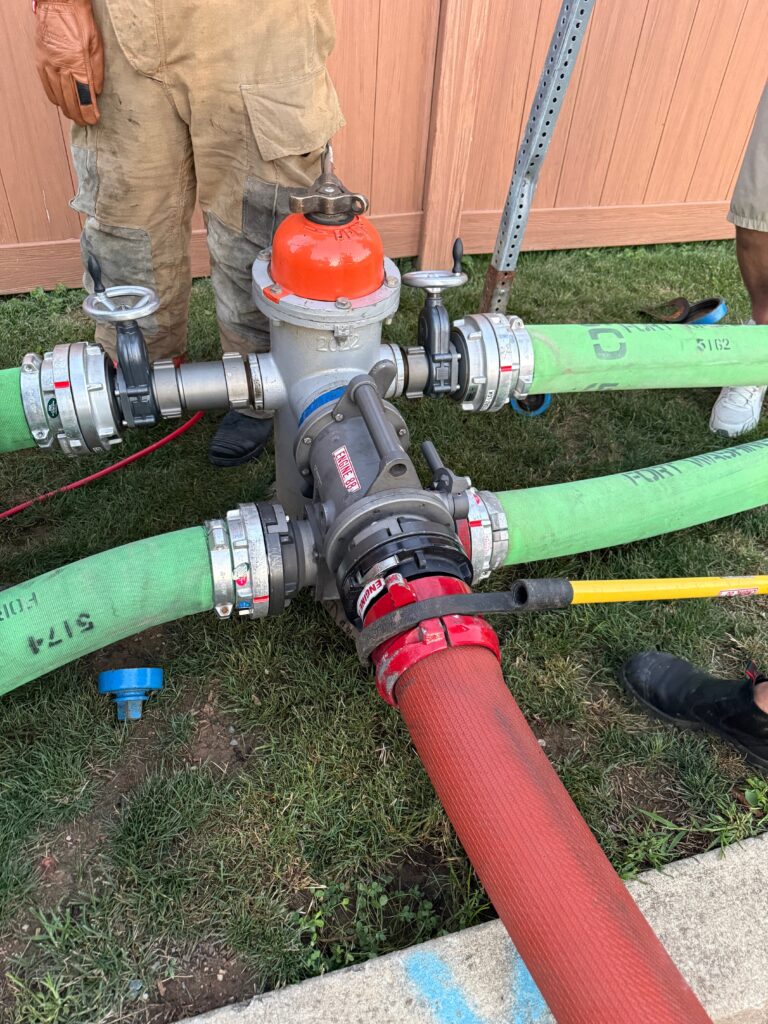
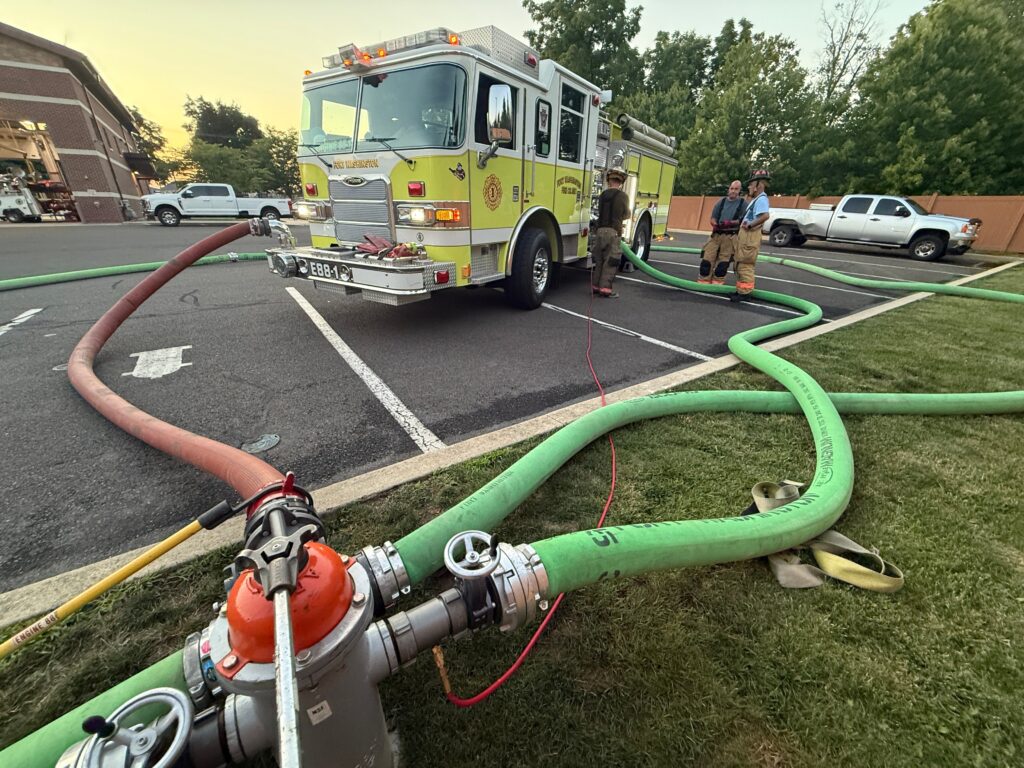
Municipal and volunteer departments run mixed rosters — career staff alongside volunteers, veterans alongside new recruits — across a hydrant system that isn’t always uniform. Some areas run high flow at low pressure; others need every bit of pressure a hydrant can give. Budgets rarely stretch to specialist maintenance staff, so equipment needs to hold up without one.
The quarter-turn handle keeps training time low across a roster with mixed experience levels, and the automatic hydrant-to-pump changeover removes a decision point crews would otherwise have to make correctly, every time, under pressure. Station-level maintenance fits departments without an in-house machine shop, and modular couplings mean the valve can adapt as thread standards or hose sizes change across a jurisdiction.
Typical municipal configurations use standard NHT threads, mount engine-side for first-due hydrant operations, and pair with the included hydrant wrench for quick connection.
Refinery & Industrial Fire Brigades
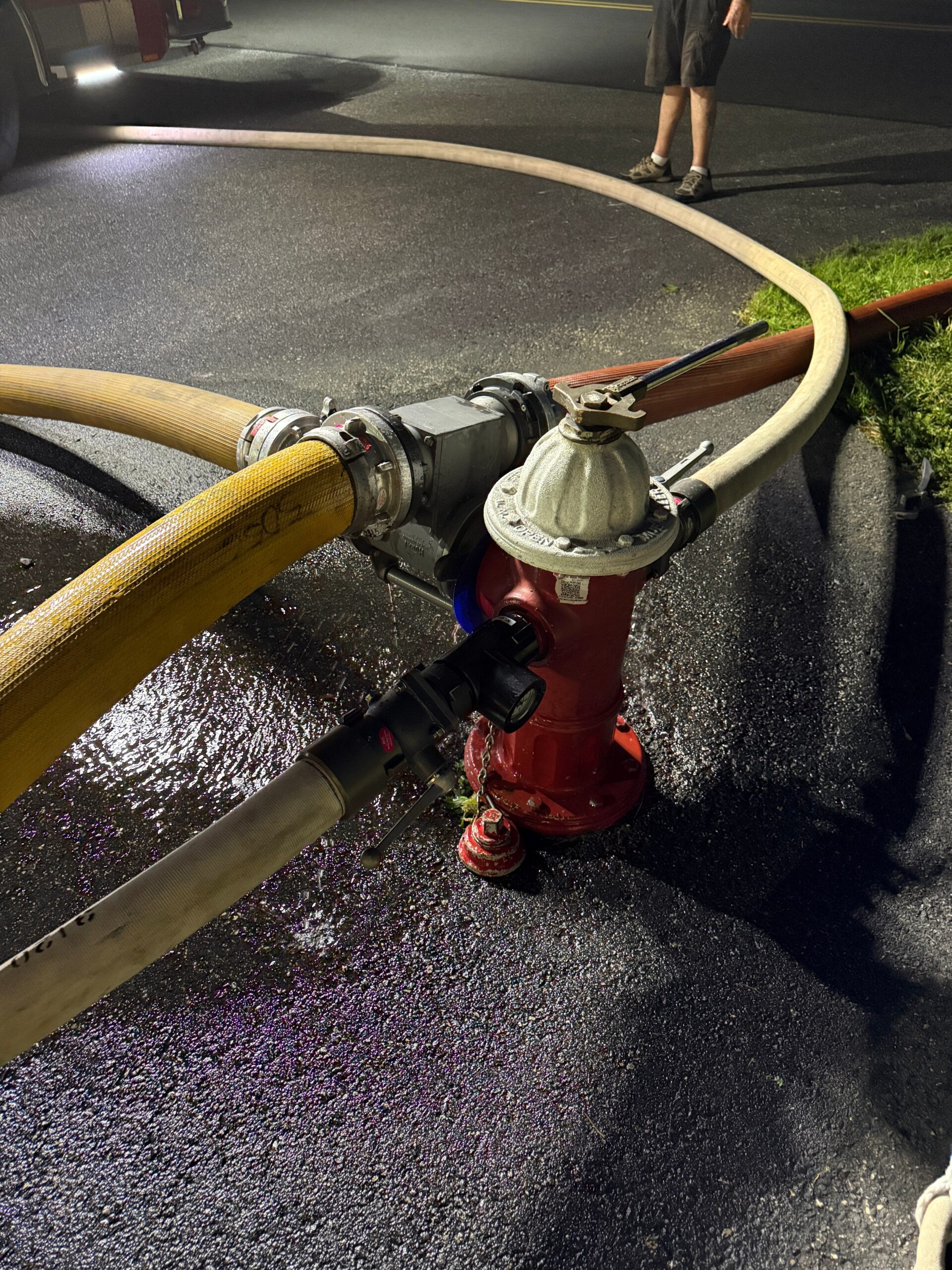
Industrial fire brigades protecting refineries, tank farms, and process facilities face a different set of demands: sustained high-flow operations for large-diameter hose, a harsh operating environment with chemical exposure and weather extremes, and equipment that has to perform flawlessly after sitting idle for long stretches between incidents.
The Humat valve’s full-bore waterway supports high GPM without friction loss, and hard-coated aluminum alloy resists the corrosion that harsh industrial environments cause over time. Modular coupling design means the valve can be configured to match a specific facility’s hose and thread standards rather than forcing the site to adapt to the equipment.
Typical industrial configurations use Storz or facility-specific thread couplings, and are often deployed across a site’s hydrant network rather than a single mobile unit.


Airport Rescue & Firefighting (ARFF)
ARFF response windows leave no room for equipment that hesitates. Aircraft fire scenarios can demand extremely high flow rates delivered under tight time constraints, in an environment that may include fuel spill hazards and exposed airfield conditions.
The Humat valve’s automatic changeover between hydrant and pump pressure means crews aren’t stopping to operate a second control at the exact moment speed matters most, and durable construction holds up to exposed airfield conditions over time.
Typical ARFF configurations are matched to the specific apparatus and airport hydrant system standards in use, with a valve mounted for rapid deployment.
Because ARFF equipment often sees less frequent but higher-stakes use than a municipal engine, the same low-maintenance, station-serviceable design that benefits a busy urban department also means an airport’s valve is ready and dependable on the rare occasion it’s needed at full capacity.
One valve platform, every environment.
However you operate
The First Step is the Same
Questions by Application.
Does one Humat valve work across municipal, industrial, and airport use, or are these different products?
It’s the same core valve platform in all three cases. The differences are mainly in coupling and mounting configuration to match each environment’s hose and thread standards.
Can Humat help spec a valve for a high-flow industrial application?
Yes — send us your flow requirements and current hose and thread specifications, and we’ll recommend a configuration.
Is the Humat valve suitable for corrosive or harsh outdoor environments like refineries and airfields?
Yes. The hard-coated, heat-treated aluminum alloy body is built to resist corrosion in demanding outdoor environments.
Do you support mutual aid departments that need standardized equipment across multiple agencies?
Yes. Modular couplings make it easier to standardize training and maintenance across agencies that may be running different legacy equipment today.
How do I know which configuration is right for my operation?
Will Humat work directly with our facility's safety or engineering team during specification?
Yes. We’re glad to work directly with your safety, engineering, or procurement team to match a configuration to your facility’s specific standards.
Can we order a single valve, or only fleet-wide or facility-wide quantities?
Either. We support everything from a single valve for one engine to fleet-wide or facility-wide orders.
Does the same warranty and support apply regardless of which segment we're in?
Yes. Municipal, industrial, and airport customers all receive the same level of support, since every customer is running the same underlying valve platform.
Tell us about your operation.
Whether you’re outfitting one engine or an entire fleet, we’ll help you spec the right valve and coupling configuration. We’re glad to work directly with your safety, procurement, or engineering team to make sure the configuration matches your facility’s standards from day one.